DIY versus professional gardeners when to hire each service
If you've ever stood in the garden on a Saturday morning, looking at a patch of tangled shrubs, a lawn that's more moss than grass, and a fence panel that's clearly had enough, you've probably asked the same question: should I do this myself, or call in a professional gardener? That's the heart of DIY versus professional gardeners when to hire each service. The answer is rarely black and white. Some jobs are simple, satisfying, and cheap to tackle yourself. Others are messy, heavy, risky, or just more expensive to get wrong than to get done properly.
This guide breaks the decision down in plain English. You'll see where DIY makes sense, where a professional gardener is the smarter choice, what to expect from each route, and how to judge cost, time, safety, and results without second-guessing yourself all week.
Why DIY versus professional gardeners when to hire each service Matters
Garden work looks deceptively simple. A hedge is a hedge, a lawn is a lawn, and a bit of clearance is just a bit of clearance... until you're halfway through and realise the job needs more time, more kit, and more know-how than you planned for. That's why the DIY versus professional gardeners when to hire each service question matters so much.
The wrong choice can cost you in three ways:
- Time - a job that should take an afternoon can swallow an entire weekend.
- Money - buying tools you'll only use once can be a false economy.
- Risk - some garden tasks involve height, machinery, heavy waste, or awkward lifting.
There's also the quality side. A tidy lawn cut is one thing. A lawn that's been scalped, a hedge that's been cut back at the wrong time, or a tree that's been hacked badly is another matter altogether. Let's face it, some mistakes in a garden don't shout at you immediately. They show up six weeks later when regrowth looks patchy or a plant simply refuses to recover.
For many homes, the smartest approach is not "DIY or hire" but "DIY some, hire some." Regular maintenance can often be handled at home, while structural, seasonal, or dangerous work is better left to a professional. If you want a broader view of the available options, it helps to start with a services overview and work backwards from the actual job in front of you.
How DIY versus professional gardeners when to hire each service Works
At a practical level, the decision comes down to five things: the size of the task, the skill required, the tools involved, the safety risk, and how much you value your own time. That sounds obvious, but people often focus on only one of those. Usually cost. Sometimes pride. Occasionally optimism, which can be dangerous in a garden.
DIY gardening works best when the job is routine, low risk, and easy to learn. Examples include basic lawn mowing, deadheading flowers, weeding borders, watering, light pruning, and collecting leaves. These jobs are manageable if you have time and are happy to keep on top of them.
Professional gardeners are a better fit when the task needs proper horticultural judgement, specialist tools, or a reliable finish. That might include hedge shaping, overgrown garden clearance, larger landscaping works, decking, or tree-related work. A professional brings not just labour, but sequence, pacing, and the practical habit of spotting problems before they become bigger problems.
In day-to-day terms, a pro gardener will usually follow a simple process: assess the site, identify any risks, agree the scope, carry out the work, and clear away the waste. If you're comparing service levels, a page like garden maintenance can help you understand what regular professional upkeep tends to cover. For larger or messier jobs, garden clearance is the more suitable route.
DIY, by contrast, is more flexible. You decide the pace, you stop when you want, and you can spend half an hour here and there. That's great for small gardens and people who genuinely enjoy the work. But if your free time is already thin, a "cheap" DIY job can quietly become the most expensive thing you do all month. Bit of a nuisance, really.
Key Benefits and Practical Advantages
There are good reasons people choose each option. The best choice depends on what you want the garden to do for you, not just how it looks on paper.
Benefits of DIY gardening
- Lower upfront spend if the task is small and you already own basic tools.
- Full control over timing, finish, and how much is done in one go.
- Ongoing learning - the more you do, the better you get at reading your garden.
- Flexibility for small weekly tasks that don't need special equipment.
Benefits of hiring a professional gardener
- Speed - what takes you two days might take a team a few hours.
- Better results for trimming, shaping, clearing, and more technical work.
- Reduced physical strain if the job is heavy, repetitive, or awkward.
- Safer handling of tools and tasks that carry real risk.
- Waste removal and disposal handled in one visit, which is a lovely thing when you have a mountain of clippings staring back at you.
A useful way to think about it is this: DIY is often best for maintenance, while professionals are often best for restoration, renovation, and riskier work. That's not a hard rule, but it's a good starting point.
Professional services also become more attractive when you're aiming for a specific outcome, such as better kerb appeal before selling, a safer garden for children, or a more polished outdoor space for entertaining. If you're planning anything beyond routine upkeep, you may also want to look at landscape gardening or broader landscaping support.
Who This Is For and When It Makes Sense
This decision is relevant to almost anyone with outdoor space, but it becomes especially important in a few common situations.
DIY makes sense if you:
- have a small to medium garden with straightforward upkeep
- enjoy hands-on work and don't mind learning as you go
- already own suitable tools
- have time to spread work over several sessions
- are dealing with low-risk tasks like mowing, weeding, or deadheading
Hire a professional gardener if you:
- are facing overgrowth, dense waste, or a neglected garden
- need a neat, consistent finish for hedges, lawns, or borders
- have limited time, limited mobility, or back issues
- need specialist equipment or safe handling of tall or heavy growth
- want the garden ready for an event, sale, tenancy change, or seasonal reset
There's also the "I could do it, but I really shouldn't" category. Tree work is the obvious one. Anything involving height, chains, unstable limbs, or uncertainty about what can be safely cut should be approached very carefully. For those jobs, a service such as tree lopping and removal is the sensible option, not a ladder and a hopeful attitude.
Likewise, if the garden includes a decked area that needs installing or replacement, the job moves from routine gardening into more technical outdoor improvement. That's where decking services can make far more sense than trying to patch something together yourself over a bank holiday weekend.
Step-by-Step Guidance
If you're stuck deciding, use this practical process. It's simple, but it works.
- Define the job clearly. Is it lawn care, hedge trimming, waste removal, or a bigger garden overhaul?
- Check the scale. A single hedge is one thing; a whole boundary line is another.
- Think about access. Narrow side access, steep slopes, wet ground, and awkward corners all make jobs harder.
- Assess risk honestly. If height, power tools, sharp blades, or heavy lifting are involved, pause and reassess.
- Estimate the real time commitment. Include setup, clean-up, disposal, and the inevitable "quick second trip" for extra supplies.
- Compare tool costs. Hiring a professional may be cheaper than buying or replacing gear.
- Decide whether the result needs to be precise. Some jobs can look a bit rough around the edges. Others really can't.
- Choose the route that protects the garden long term. If a job is likely to damage plants, surfaces, or structures, hire out.
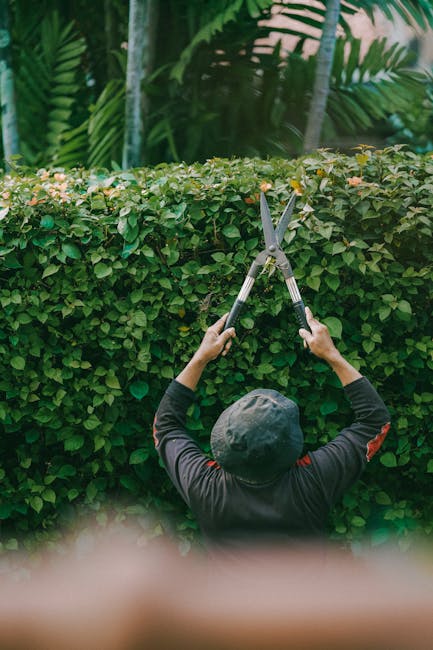
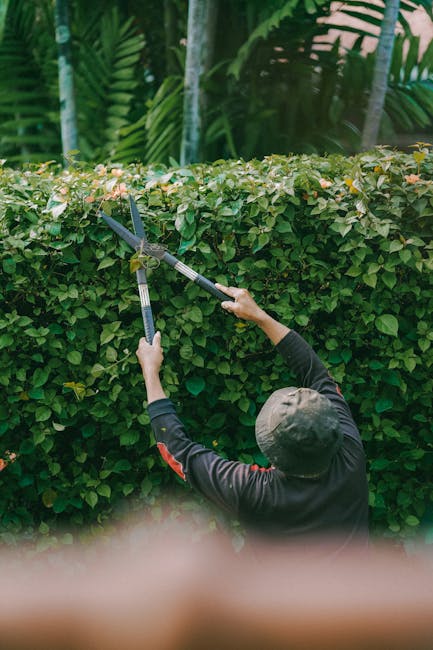
If you need a practical example, imagine a front garden with an overgrown hedge, patchy grass, and years of leaf build-up. You could mow the lawn yourself and clear a small amount of litter. But if the hedge is tall, the waste is bulky, and the whole space needs a reset, a professional visit is likely the better call. A service such as hedge trimming is especially useful when the goal is a clean, even shape rather than a rushed cut-back.
For simple upkeep once the garden has been brought back under control, a lighter recurring service like lawn mowing can keep things manageable without letting the place slide again.
Expert Tips for Better Results
Here's the stuff that saves time and prevents headaches.
- Match the task to the season. A lot of pruning and shaping work is best planned, not improvised on a sunny afternoon.
- Start with the dirtiest or heaviest job first. Once the bulky waste is gone, everything else feels easier.
- Cut less than you think. Especially with hedges and shrubs. You can always remove more, but you can't put it back.
- Use the right tool for the right plant. Blunt or oversized tools can bruise stems and leave untidy cuts.
- Keep a waste plan. Clippings, branches, and soil all create more volume than people expect.
- Book maintenance before things become urgent. That one's boring, but very true.
One small real-world observation: most people are pretty good at the visible part of garden work. Fewer people enjoy the finish-up. The raking, sweeping, bagging, and hauling. That's often the bit that makes a professional service worth it, because the garden looks properly done rather than merely worked on.
If sustainability matters to you, it's worth considering how waste is handled. A professional team should be able to explain its approach to green waste and responsible disposal. You can also look at recycling and sustainability to understand how environmental care fits into the service model.
And if you want the whole process to be less stressful, keep one thing in mind: gardening doesn't have to be a heroic event. Sometimes the best result is simply a calmer, cleaner space that doesn't shout for attention every time you open the back door.
Common Mistakes to Avoid
Most gardening mistakes are not dramatic. They're small choices made too late, or with not enough information. Still, they add up.
- Choosing DIY because it feels cheaper without counting tool hire, waste bags, fuel, and your own time.
- Hiring a professional too late after the job has become tangled, unsafe, or much larger than expected.
- Underestimating garden waste and then struggling to get rid of it.
- Cutting hedges and shrubs without checking growth habits or seasonal timing.
- Using the wrong ladder, saw, or trimmer because "it'll do." Usually it won't, not properly.
- Assuming all outdoor jobs are the same when they clearly are not.
Another common one: treating a garden like a one-off project instead of an ongoing space. A one-off DIY overhaul is fine if the work is light. But if your garden tends to get away from you, regular professional maintenance can actually be the calmer, cheaper path over time.
One slightly awkward but very real mistake is forgetting to think about boundaries, fences, roots, and neighbouring gardens. A job that feels simple from your side can quickly become complicated if access is tight or if the work affects adjacent areas. Not fun, and very easy to avoid with a little planning.
Tools, Resources and Recommendations
You don't need a giant equipment shed to maintain a garden, but you do need the basics that suit the size of the job.
Useful DIY tools for simple garden care
- lawn mower sized correctly for your lawn
- pruners or secateurs for light trimming
- gloves that actually protect your hands
- garden waste bags or bins
- rake, broom, and a sturdy bucket or trug
When professional equipment matters
- tall hedge cutters for difficult reaches
- larger clearance tools for thick overgrowth
- specialist machines for landscaping or ground preparation
- safer handling equipment for branches, heavy debris, or awkward access
For many homeowners, the best "resource" is not a tool at all but a clear scope of work. Before you begin, write down exactly what needs doing. Then decide which items are light enough to do yourself and which are best handed over. That simple split can save a great deal of faff.
If you're comparing service levels, it can help to look at the provider's general approach to expectations and budgeting. A page like pricing and quotes is useful for understanding how a professional service may frame a job, while about us can give you a sense of how the business presents itself and what it values.
For customers who want to understand standards around billing, payment and service clarity, it can also be reassuring to review payment and security and the site's terms and conditions. No one gets excited reading that kind of page, fair enough, but it does help set expectations properly.
Law, Compliance, Standards and Best Practice
Most ordinary gardening is straightforward, but some tasks carry safety, property, or environmental responsibilities. This is where professional judgment matters.
In the UK, homeowners are generally responsible for ensuring work is carried out safely on their property, especially where ladders, power tools, waste removal, or tree work are involved. If you're DIYing, that means using equipment properly, keeping access clear, and not taking avoidable risks. If a task feels beyond your confidence, that's a sensible moment to stop.
For professional gardeners, best practice usually means more than just turning up with tools. It includes:
- carrying appropriate insurance and operating safely
- using suitable equipment for the task
- removing waste responsibly
- working with care around fences, paving, planting beds, and neighbouring boundaries
- being clear about scope, access, and any limitations before starting
Tree-related work deserves particular caution. Anything that could affect safety, property damage, or boundary disputes needs a careful assessment rather than a guess. A professional service is the better route if there is any uncertainty at all. And if you're checking how a business handles practical risk, insurance and safety is the right kind of page to read.
It is also worth remembering that some garden waste should not just be piled up and forgotten. Responsible disposal, sensible sorting, and clean handover are all part of good practice. This is not the glamorous side of gardening, but it is the grown-up side.
Options, Methods, or Comparison Table
Sometimes the easiest way to choose is to compare the options side by side. This table is a practical shorthand, not a rigid rulebook.
| Task type | DIY suitability | Professional suitability | Best choice when... |
|---|---|---|---|
| Weekly lawn mowing | High | Medium | You have time, a decent mower, and a manageable lawn |
| Hedge trimming | Medium | High | The hedge is tall, wide, formal, or hard to access |
| Weeding and deadheading | High | Medium | The work is routine and you enjoy regular upkeep |
| Garden clearance | Low to medium | High | The garden is overgrown, cluttered, or needs waste removed fast |
| Tree work | Low | Very high | Height, heavy branches, or uncertain risk is involved |
| Decking and larger outdoor upgrades | Low to medium | High | You want a durable finish and correct installation |
Another useful rule: if the task affects structure, safety, or long-term plant health, lean professional. If it mainly affects appearance and routine upkeep, DIY is more likely to be enough.
Case Study or Real-World Example
Here's a realistic scenario. A small London terrace has a back garden that started out neat enough, then drifted. The lawn has gone thin in patches. The hedge has grown uneven. Pots are dry. There's a pile of old branches near the shed, and the side passage is too narrow for much movement without bumping elbows and swearing a bit.
The homeowner can handle some of it. They mow the lawn, remove a few weeds, water the beds, and sweep the patio. That part is fine. But the hedge is too high to reach comfortably, the branches need proper disposal, and the garden needs a proper reset before winter. So the smarter move is to hire a professional for the hedge trimming and clearance, then keep the simple maintenance going personally afterwards.
That split approach usually gives the best outcome. The heavy lift gets done properly. The garden is brought back under control. Then DIY maintenance keeps it from sliding again. It's not glamorous, but it's effective. And honestly, effective is what most people want when they stand at the back door and see the mess first thing in the morning.
In situations like this, a one-off clearance combined with ongoing maintenance can be a very practical blend. If the garden needs a full reset, professional help with garden clearance is often the turning point. If the goal is to keep the space tidy afterwards, regular garden maintenance can stop things creeping back.
Practical Checklist
Use this checklist before deciding whether to DIY or hire a professional gardener.
- Have I clearly identified the task?
- Do I know how much time it will really take?
- Do I already have the right tools?
- Is the work safe for me to do without specialist help?
- Will the result need to be neat, consistent, or long lasting?
- Am I dealing with heavy waste, tall growth, or awkward access?
- Could I damage plants, fences, decking, paving, or structures if I get it wrong?
- Would paying for the job free up enough time to be worth it?
- Is this a routine maintenance job or a bigger one-off reset?
- Do I need this done now, or can it wait for a better season or weather window?
Quick rule of thumb: if you can do the job safely, cleanly, and without special equipment, DIY is often fine. If the job is large, risky, or likely to spiral, hire a professional.
Conclusion
The best answer to DIY versus professional gardeners when to hire each service is usually a balanced one. DIY is excellent for small, routine, low-risk work that you can keep on top of. Professional gardeners are the better choice for larger, riskier, more technical, or time-sensitive jobs where finish and safety matter. A good garden doesn't have to be either completely self-managed or fully outsourced. Most of the time, the smartest approach sits somewhere in the middle.
Use DIY where it keeps you close to the garden and saves money without creating stress. Bring in a professional when the task is too big, too high, too messy, or too important to get wrong. That simple judgment will save you a lot of frustration, and probably a bit of elbow grease too.
Get a free quote today and see how much you can save.
And if you're still weighing it up, that's perfectly normal. A garden is never just a list of jobs; it's part of the home. Take the practical path, trust your judgement, and don't be afraid to ask for help when the job asks for more than a Saturday can give.
Frequently Asked Questions
What jobs are best left to a professional gardener?
Anything involving height, heavy overgrowth, large waste removal, difficult access, or specialist shaping is usually better handled by a professional. Hedge trimming, garden clearance, landscaping, decking, and tree-related work are common examples.
What garden tasks are safe and sensible to do myself?
Basic mowing, light weeding, deadheading, watering, simple pruning, and general tidying are usually suitable for DIY if you have the right tools and enough time. These are the tasks most homeowners can handle well.
Is DIY gardening actually cheaper than hiring someone?
Sometimes, yes. But only if the job is small and you already have the tools. Once you include tool purchase, waste disposal, fuel, and your own time, DIY can become less cost-effective than it first appears.
When should I hire a gardener instead of doing it myself?
Hire a gardener when the job is bigger than a routine tidy-up, when safety is a concern, when the finish needs to look polished, or when you simply do not have the time. If you feel like the job is becoming a weekend project rather than a quick task, that's a good sign to call in help.
Can a professional gardener help with a neglected garden?
Yes. A neglected garden is often exactly the kind of job professionals are best at. They can clear, trim, shape, and reset the space so it becomes manageable again. After that, regular maintenance is much easier.
How do I know if a hedge is too big for DIY trimming?
If you need a ladder to reach it, if the hedge is very wide or dense, or if you need a consistently neat finish, it is probably better to hire a professional. Tall hedges can be awkward and surprisingly easy to get wrong.
What is the difference between garden maintenance and garden clearance?
Garden maintenance is regular upkeep like mowing, trimming, and keeping the space tidy. Garden clearance is more about removing overgrowth, clutter, and accumulated waste to restore the garden to a manageable state.
Do professional gardeners remove garden waste?
Many do, and it is one of the biggest advantages of hiring someone. Always check what is included before booking. Waste removal can save a lot of hassle, especially after clearance or heavy trimming.
Can I mix DIY and professional services?
Absolutely. In many homes, that is the best option. You might do the weekly mowing and weeding yourself, then bring in a professional for hedge trimming, clearance, or larger seasonal jobs. It is often the most practical balance.
Are tree jobs safe for homeowners to tackle?
Generally, no, not beyond very small and low-risk pruning. Tree work can involve falling branches, height, unstable ground, and a lot of force. If there is any doubt, leave it to a specialist service such as tree lopping and removal.
How often should I book professional garden maintenance?
That depends on the size of the garden and how fast it grows, but regular maintenance is usually more effective than waiting until everything is overgrown. A modest, consistent schedule is often easier and cheaper to manage than major catch-up work.
What should I check before hiring a gardener?
Check what is included, how waste is handled, whether the work is insured, how the pricing is structured, and whether the service fits the job you actually need. Clear expectations make for a much smoother day all round.
How do I decide quickly between DIY and professional help?
Ask yourself three questions: Is it safe? Do I have the tools? Will I still be happy with the result next week? If the answer to any of those is no, professional help is usually the better call.